Adventures in Genealogy - Genealogy on Higher Ground
  • Home
  • My Bloggin' Research
  • Plantations & Enslaved
    • Enslaved/Slaveholders
    • The Beyond Kin Project
  • MY Own Family Research Pages
  • Resources
    • US South Research
    • Tips & Tricks
    • Links
    • Genealogy Forms
  • Genealogy
    • Mysteries
  • Military History
    • The Katy-Did Crash
    • Oak Mountain Crash
    • Ab Mack
    • Robert L Duke
  • About Me
    • Contact >
      • Adventures In Genealogy Forums
      • AIG Chat
    • Special Thanks... >
      • Dedication
      • Memorial
      • Sources
  • Cemeteries
  • Cemeteries Part II
  • Home
  • My Bloggin' Research
  • Plantations & Enslaved
    • Enslaved/Slaveholders
    • The Beyond Kin Project
  • MY Own Family Research Pages
  • Resources
    • US South Research
    • Tips & Tricks
    • Links
    • Genealogy Forms
  • Genealogy
    • Mysteries
  • Military History
    • The Katy-Did Crash
    • Oak Mountain Crash
    • Ab Mack
    • Robert L Duke
  • About Me
    • Contact >
      • Adventures In Genealogy Forums
      • AIG Chat
    • Special Thanks... >
      • Dedication
      • Memorial
      • Sources
  • Cemeteries
  • Cemeteries Part II
  Adventures in Genealogy - Genealogy on Higher Ground

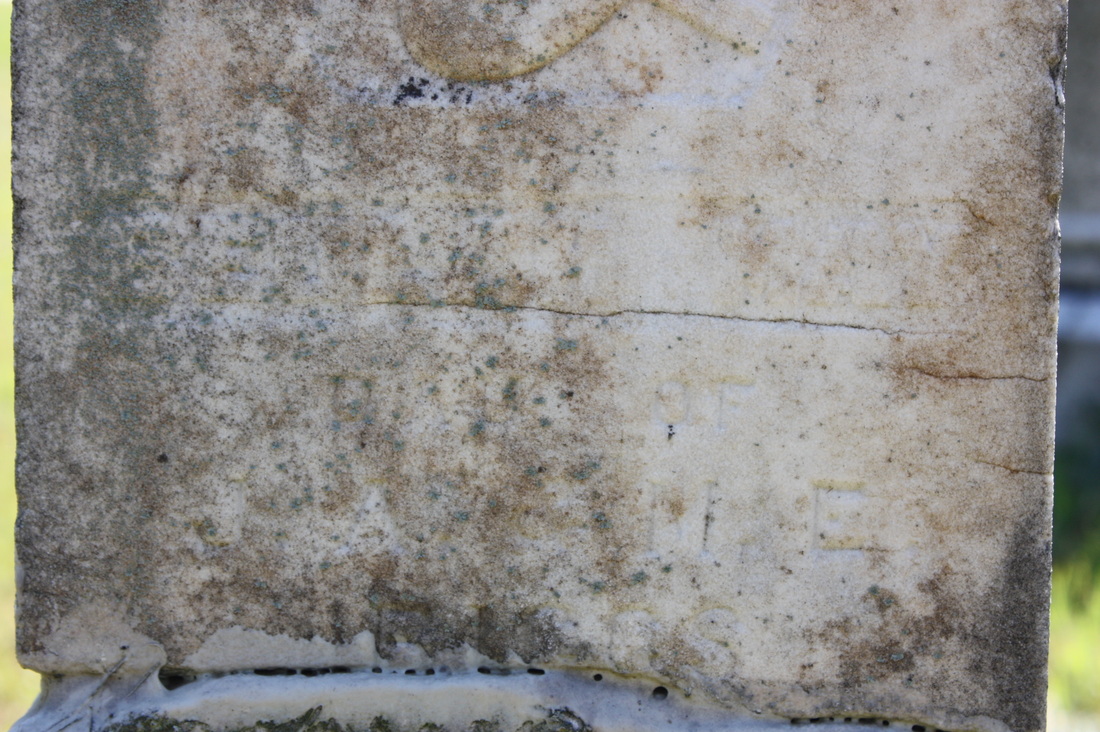
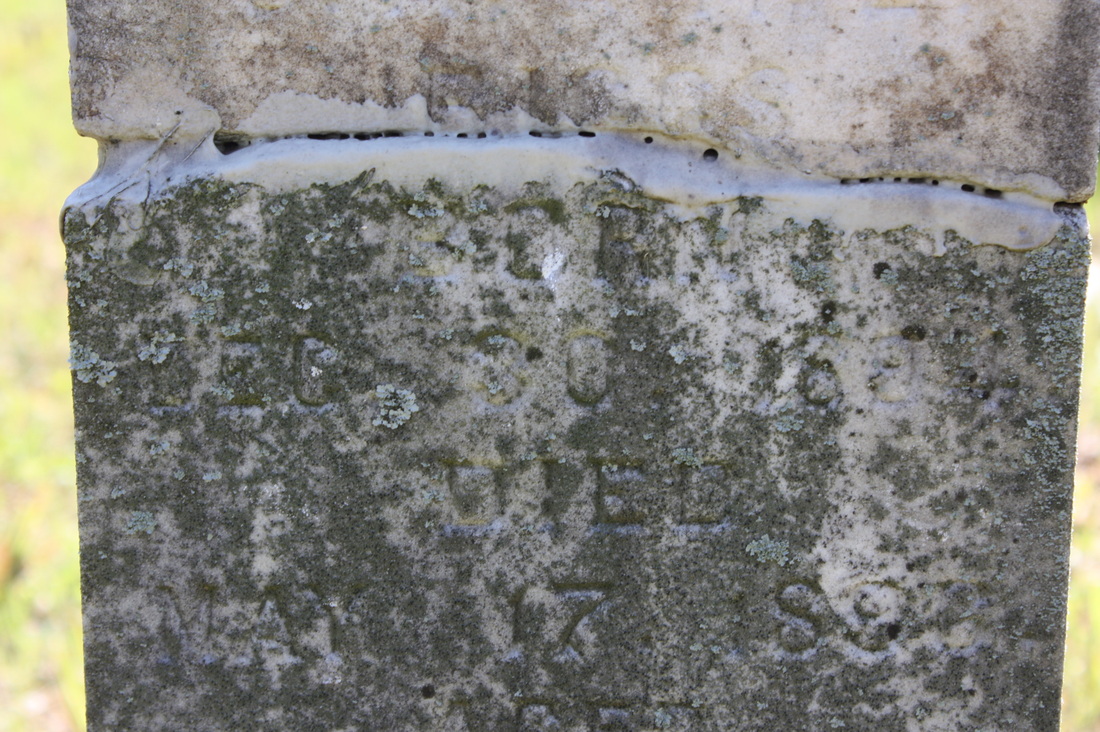
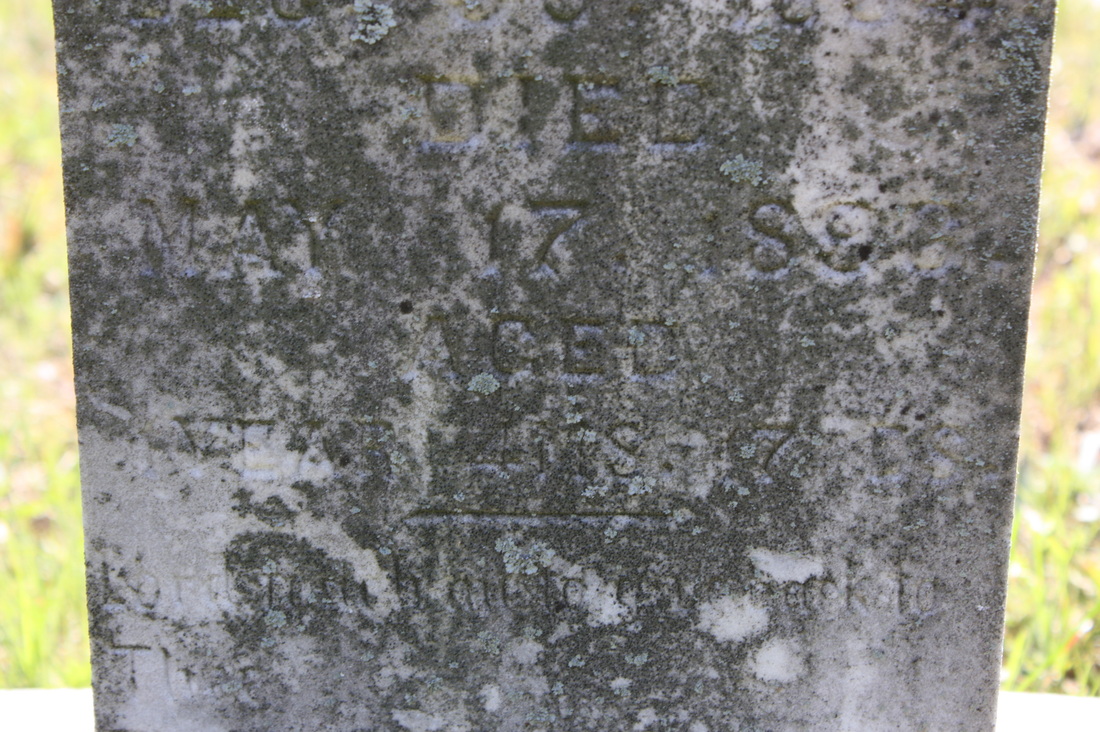
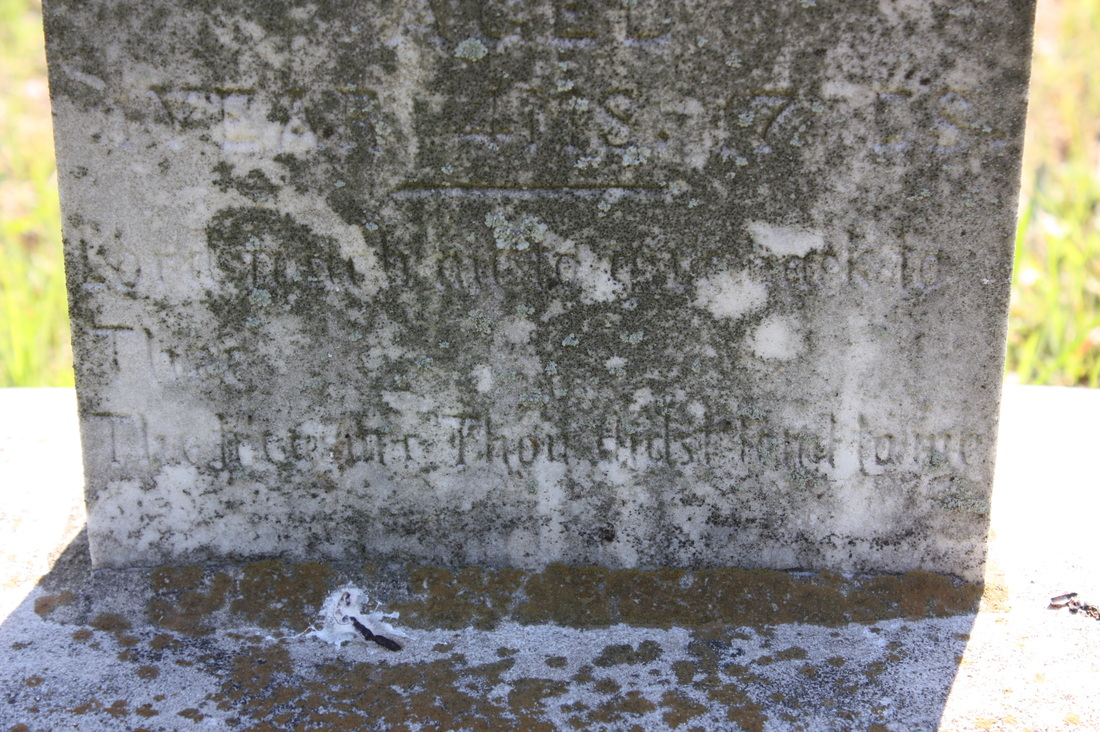
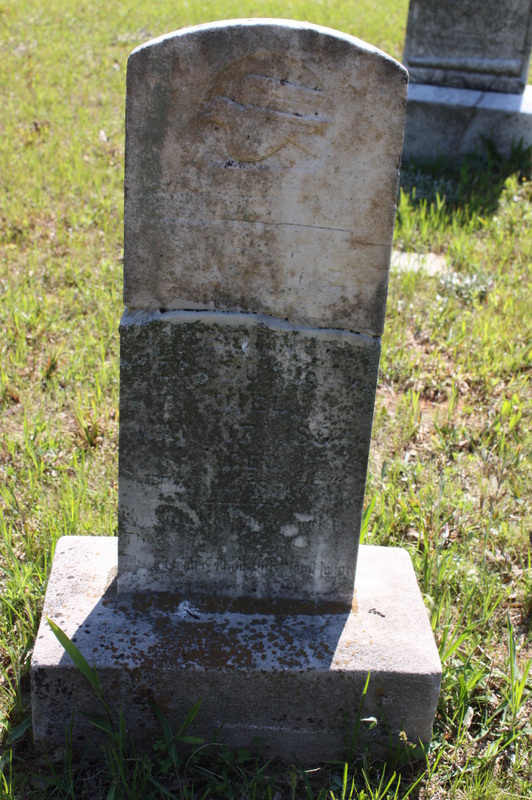
Difficult to read Tombstones

5/15/2013

1 Comment

 
Back in the day, the thing to do to read tombstones was either chalk the whole thing with white chalk or use paper and a crayon to do a etching.

The problem became that after years of genealogists, school students and amateur historians rubbing stones with chalk, the damage was worse than the weathering that took place naturally.

There are still people who are suggesting these practices but I send out a plea to all researchers alike... Please do not. do a little research on Safe Tombstone Cleaning and Transcribing. I have two links to help you.
North Carolina's New Hanover County has a great resource that I recommend often on Safe Solutions for hard to read tombstones. The second is The Association for Gravestone Studies. They have quite a few great articles on things such as stone types, adhesives and markers.

Picture
Picture
Picture
Picture
Whatever you do while you are researching in cemeteries, make sure you follow some ethical and moral practices. Some of these older techniques had the right thought behind them (preservation for the future) but the science behind it was flawed or not thoroughly thought out.

Stones should NEVER be cleaned or bleached to an unnatural white shine. This takes away from the integrity of the age of the stone and makes it appear as if it is a new stone on an older grave. Anyone who tells you they will restore a stone should be highly questioned about their practices, the items they use as 'glue" and what degree of restoration is desired should be made.

To me, You should never restore except to place the stone or memorial back together in it's original position.  If your relatives grave is hard to read, or broken or missing, you can always go purchase a plaque or small new stone to go along side it or in front of it, stating the information from the stone and the date the new stone was added and by whom. This to me, is the only acceptable way to preserve that information for future generations.
Picture


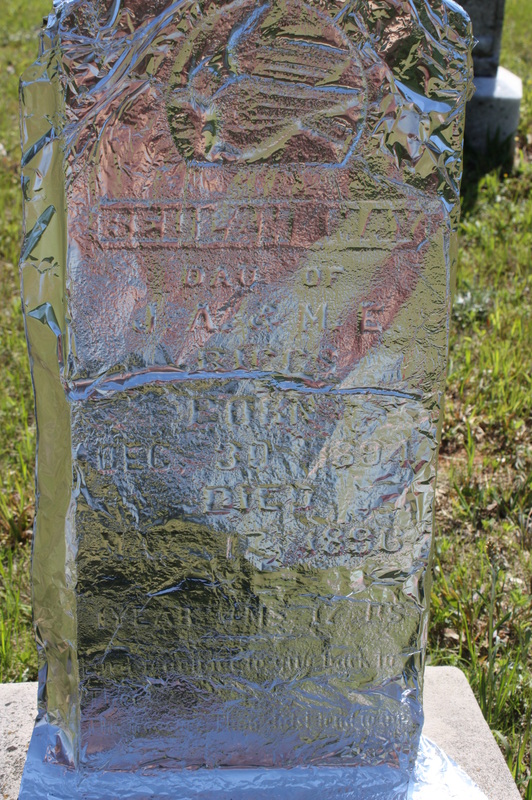
The method that I have recently fallen in love with is the Aluminum Foil method. Head on out to your local dollar store and purchase yourself the cheapest aluminum foil you can buy. Make sure it contains more that 10 feet or whatever, Get the bigger roll. Trust me, you'll use it! Don't forget to take with you scotch tape. No duct tape, no masking tape and no packing tape. You only need it to stick for a few minutes, and you do not want to damage the stone with sticky glue that will not come off over time.

Unroll enough of it to go over the top of the stone, and hang slightly over the back. use one or two pieces of scotch tape as needed, as small as possible so you do not damage the moss, growth or natural patina of the stone and it's age.

With it secure, GENTLY use your finger to feel for the areas of writing or designs. Do not press hard. If the stone has hidden cracks, weaknesses or faulty areas, you could inadvertently create more damage than you want to. As your feel, run your finger into the depressions. You will quickly see the letters appear. Pay special attention to letters and make sure the way it is reading makes sense. It's easy to miss the bottom line of an E and mistake it for an F for instance. Cursive or script is sometimes difficult. Just have some patience.

The final product looks like the photo below. You can now photograph the stone with the foil and without so you have an accurate reading, and the accurate appearance of the stone as well.
Picture


In the end, do what you can with what you have in front of you, have fun, preserve your family history and the history of others, share your finds and enjoy your Adventures in Genealogy today and in the future!
1 Comment
Adam Golightly link
8/24/2021 04:48:53 pm

My sister has been thinking about restoring the headstone of her great-grandmother. She would really like to get some help from a professional in order to be safer. I liked what you said about how they can preserve the stone by paying attention to the letters, and depressions.

Reply


Leave a Reply.

    Help Me Keep this Website Free. Donate from just $1 to any amount of your choice! 

    Picture

    Author

    Michele is an obsessed mother of 4 residing in North Alabama. Hobbies include long walks in the woods, on the beach and in strange cemeteries and libraries. Genealogy friends need only apply.

    Categories

    All
    Family
    Ftm Tips
    Genealogy
    History
    Holidays
    In The Beginning
    My Way Monday
    Nothing But Fridays
    Thursday's Thoughts
    Tuesday's Tombstones
    Wednesday Wonders...

    Flip-Pal
Powered by Create your own unique website with customizable templates.
Photo from Tony Webster